

Bringing together 1,300 people on Saturday, October 18, at Fundição Progresso in Lapa, downtown Rio de Janeiro, the 2nd Sustainable Favela Festival featured 140 activities in a rich exchange of grassroots solutions from 100 favelas, shared with the wider public. Active since 2017, the Sustainable Favela Network (SFN)*—the event’s organizer—is now made up of 1,000 members from over 300 favelas, united in the fight for climate justice. In addition to this official coverage of the 2nd Sustainable Favela Festival, we are also publishing two complementary articles: one on the festival’s food sovereignty activities and another on its environmental education initiatives.
One of the highlights of the 2nd Sustainable Favela Festival was the launch of the COP30 Letter From the World’s Informal Settlements. The manifesto is a collective creation developed by over 100 SFN members and technical allies, aiming to assert the leadership and central role of favelas, traditional and peripheral communities at the 30th United Nations Climate Change Conference (COP30)—a global event focused on actions to fight climate change, which will take place in Belém do Pará, Brazil, from November 10–21.
Click here to watch the moving 10-minute video of the festival with English subtitles.
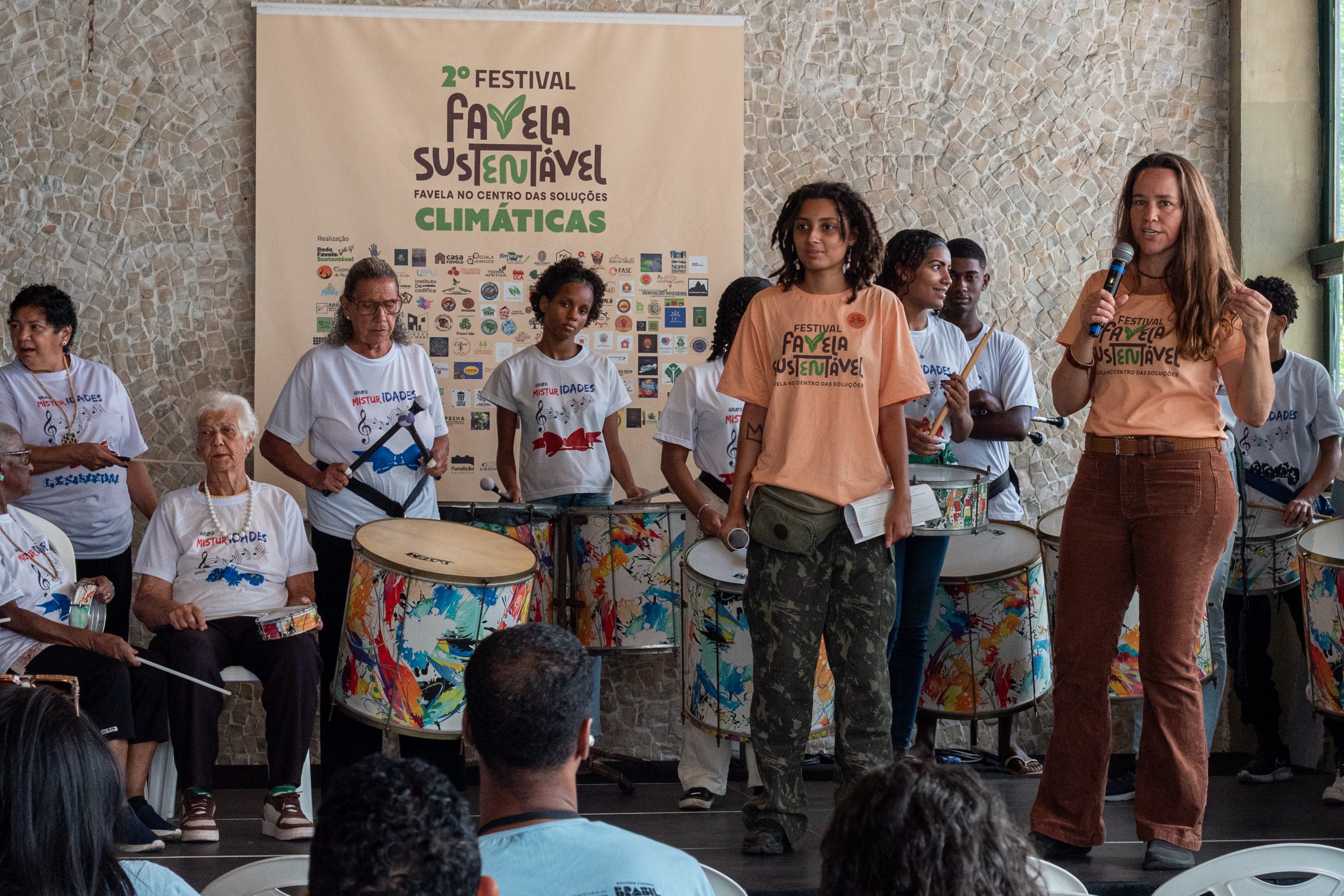
The event opened with words of welcome by Theresa Williamson, Executive Director of Catalytic Communities (CatComm)*—the Sustainable Favela Network’s managing organization—and by Thaysa Santos, network and team member. They welcomed everyone and provided guidance on the spaces and the full day’s extensive program of activities. Soon after, the intergenerational percussion group Misturidades, from Casa de Santa Ana in City of God, kicked off the day’s cultural performances.
Cultural Performances
Throughout the day, numerous cultural performances took place on the main stage of the 2nd Sustainable Favela Festival, including: the Misturidades intergenerational percussion group (Casa de Santa Ana/City of God); the theatrical productions Quariterê Queen, from Brazil, from the World and And What If We Don’t Quit? (CDDH Petrópolis); Funk and Environment (#EstudeoFunk); ballet with the choreography Story of the Black Dancer from the Community who Performed on Broadway (Juliana Coelho Dance Company/Cordovil); Baobá Root (Abebé de Ouro Humanitarian Center–CHAO/Maricá); the Literary Soirée (Ciranda Soirée/Rocinha); Eddi MC presenting hip-hop culture (Baixada Never Surrenders); 180 NELES! (Viradouro Cultural Artistic Occupation – OCA/Complexo do Viradouro, in Niterói); and Bloco Afro Òrúnmilá (Òrúnmilá Afro Cultural Group/Morro da Mineira).
Browse the Photo Album of Cultural Performances at the 2nd Sustainable Favela Festival:

Booths, a Fair and Solidarity Economy Workshops
The booths, fair, and solidarity economy workshops took place throughout the day at the Festival Market Space, featuring 50 stalls dedicated to exchanging information, selling beautiful, artisanal ecofriendly products and sharing experiences among a wide range of grassroots and favela-based collectives.
One of the exhibitors at the 2nd Sustainable Favela Festival, Ana Beatriz Serafim, from the favela of Morro da Coroa, runs a project that uses repurposed glass containers to create terrariums.
“The idea of working with glass recycling came from a kitchen where I used to work, where they’d throw away a lot of tomato sauce jars. I had the idea of making terrariums because I had already taken a gardening and environmental course, so I started researching and saw that glass is rarely recycled in Brazil. And glass is a big problem because it can take up to a million years to break down in nature—it’s the material that takes the longest. I think it’s very important to create the habit of recycling and reusing, instead of producing more goods that consume more of nature’s energy. That’s how this project came about: not only as a second source of income, but also as a way to promote sustainability, recycling and reuse.” — Ana Beatriz Serafim
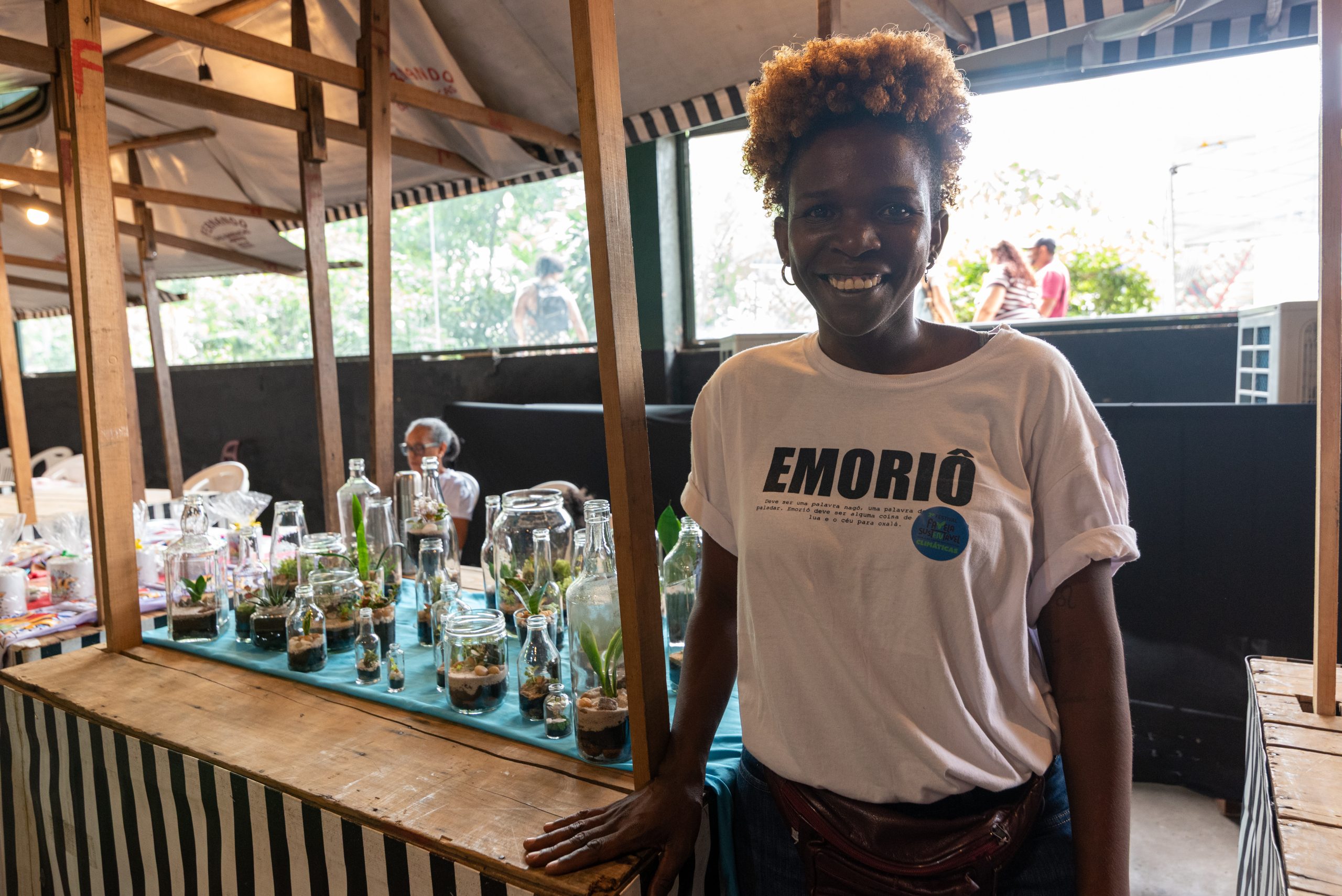
Some Participants of the Market Space: Recycled Crafts Exhibit (Nete’s Crafts/Acari); Clothesline of Wishes and Call to Action “Be an Agent of Luxury from Waste” (Luxury from Waste/Complexo da Penha); Rebuilding Dreams (Juntas Sustainable Collective/Favela do Muquiço, Marechal Hermes); The Planet Needs Help (45GERJ/Olaria); Terrariums Made from Reused Packaging Exhibit (Morro da Coroa); MUF Network (Favela Museum/Complexo do Pavão-Pavãozinho and Cantagalo); Braiding with Art (Poder de Preta/UNDEKE/Inhaúma); Upcycle: Workshop on Making Fabric Bows for Women (Edixe Social Ties/Campos Elíseos); Stencil Workshop (Maré Museum); Art and Sharing Knowledge, Aromas, and Flavors: Tasting and Activity (Green Space Vegetable Garden Project/Niterói); See and Feel Exhibit (Favela Art/Complexo do Alemão); Make It Count (CDDH Petrópolis); Sale of Natural and Handmade Products (Terra Afetiva/São João de Meriti); Sustainable Fair (Colo de Mãe Community Association – Acolo/Madureira); Cria Baixada Conscious Fashion (Recriar/Semear/Luz); Guardian’s Necklace (Seeds from the Earth/Complexo do 18, Piedade); Ana Crochet (Recanto da Areinha/Rio das Pedras); Sustainable Soap (Recanto da Areinha/Rio das Pedras); Solidarity Bazaar “Because Recycling is an Act of Love” (Recanto da Areinha/Rio das Pedras); Malu’s Vintage (National Movement of Positive Women Citizens/Irajá); Sustainable Crafts Exhibit (Marias in Action/Vila Kennedy); EcoFashion Relic (Favela In/Rocinha); Sustainable Clothing (Gallery of Heroes and Vila Esperança Capoeira Ensemble/Furquim Mendes); Maria Biju (Maria Pimentel Marinho Women’s Movement/Itacolomi); Biojewelry, Upcycle and Afro Bags (Women D’art Collective/Ladeira do Ascurra); Sale of Eco Bags, Reusable Bags and Sustainable Jewelry (Rio das Pedras Institute); Crafts Produced by the North Zone Initiative (Healthy Communities Network); Sustainable Life Project (Porto da Pedra/São Gonçalo); Products from the Artisans of the Complexo da Coruja/Covanca Community (UNIFAMAERJ and Ecosol Forum/São Gonçalo); Ecosol Fair (Ecosol/SG); Afro-Indigenous Forum (Ponto de Cultura Ofarere Cultural/Tijuquinha); Negríndia Fair (Ponto de Cultura Ofarere Cultural/Tijuquinha); Fair of Traditional African-Derived Peoples (Sustainable Terreiro Institute/Sepetiba); Agroecological Olodes (Hortelã Collective, Vargem Grande Rural Fair and West Zone’s Web of Solidarity); Greens and Vegetables Fair (Magic Peace Formula Agri-Culture/Conjunto Haroldo de Andrade IV, Barros Filho); Food Security and Sustainability (Senior Citizens’ Social Garden/Arará); Sewing and Sharing (Parque Horácio Women’s Movement/Arará); Duquesa Festeira Confectionery (Life’s+ Divas Women’s Movement/Serrinha); and Raízes do Brasil Craft Draft Beer (Small Farmers’ Movement).
Browse the Photo Album of the Market and Health & Food Justice Spaces at the 2nd Sustainable Favela Festival:

Health and Food Justice Space
The new area dedicated to health and healthy eating allowed favela-based collectives to offer agroecological lunches, as well as host discussion circles and activities focused on healthy eating, organic food production, reconnection with nature and care for the land. The space also featured activities promoting physical and mental well-being, including cycling workshops, body movement and singing sessions, capoeira, an environmental education game and waste management activities.
Carlos Greenbike, from the Pedala Queimados Association, led the Bike de Cria workshop, which engaged children in a playful activity, including a session to teach basic bike repair.
“The Bike de Cria workshop provides a playful opportunity for children to take center stage. The bicycle speaks to everyone, you know? Last year, there was a girl from Providência who didn’t know how to ride a bike. This year, the idea is to engage with them to understand their relationship with bikes: do they know how to ride one or don’t they? And also to hold a repair workshop. If the bike’s at their house and the tire goes flat, what do they do? Do they wait until they have money to fix it, or can they make this small repair themselves and gain autonomy?” — Carlos Greenbike
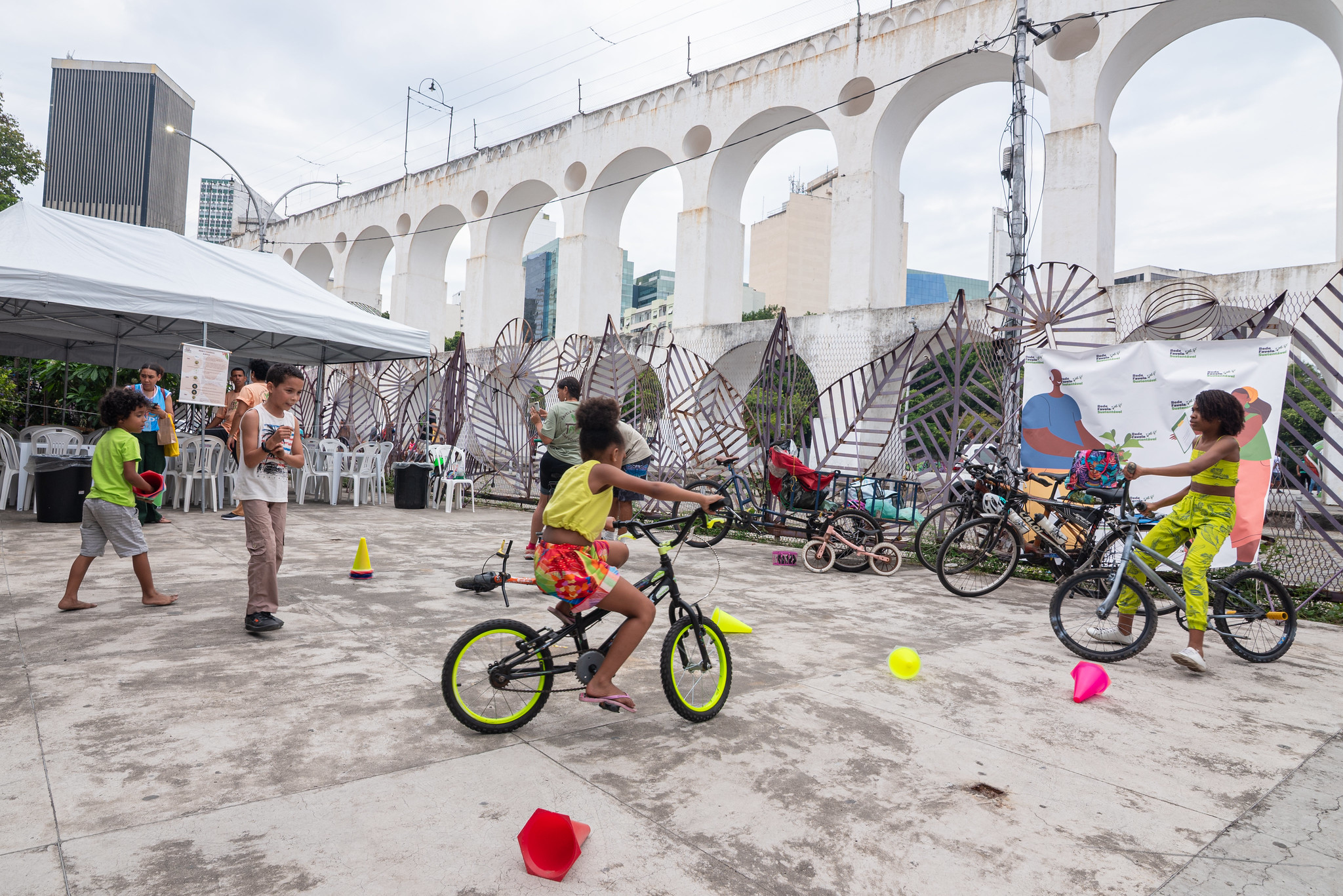
Participants of the Health and Food Justice Space: Activities for Reconnecting with Nature (RJ Forest Bathing Collective); Discussion Circle and Bike de Cria Workshop (Pedala Queimados); Bora Criá (Casa Dois/Casa Branca); Health Promotion with a Personal Trainer (Home of Dreams National Institute/Vila Cruzeiro); Discussion Circle with Salgueiro Herb Growers; Hand in Hand for Better Food: Discussion Circle with CONSEA-Rio; Okàn Odò: A Playful and Educational Experience for Children (Instituto Terreiro Sustentável/Sepetiba); Small Gardens & Big Results Intergenerational Project (Casa de Santa Ana/City of God); Sprouting and Microgreens Workshop (Raízes Collective); Grandma’s Chat in the Kitchen (Sweet Memories by Claudia Queiroga/Nova Campinas); Climate Education Game on the SDGs (Defenders of the Planet/Santa Cruz); (Worm)composting Workshop (Minhocário Arboreum); Ladies of Agri: Plants that Care for the Earth and Us (Parada Women’s Association/Parada São Jorge); Capoeira in Action (Gallery of Heroes and Vila Esperança Capoeira Ensemble/Furquim Mendes); and Solid Waste Management (Zero Waste/Solidarity Waste Collection/Praça Seca).
Exhibitions
The Exhibition Space brought the history of favelas and peripheral communities to life for visitors at the 2nd Sustainable Favela Festival. Attendees were able to explore eight exhibitions and speak directly with residents and project creators. The featured exhibitions included: Favela Climate Memory (ten favelas); Evictions Museum (Vila Autódromo); Fragments of Memory (Cerro Corá Residents in Motion), Women Warriors (Favela Museum/Pavão-Pavãozinho/Cantagalo), The Bay Detectives: Citizen Science in Action (Sepetiba Ecomuseum), Memories of Maré (Maré Museum), Rocinha: A Historical Journey Through Images (Sankofa Museum/Rocinha) and Women of Stone: 25 Years of Collective Sewing (Women of Stone Collective/Pedra de Guaratiba).
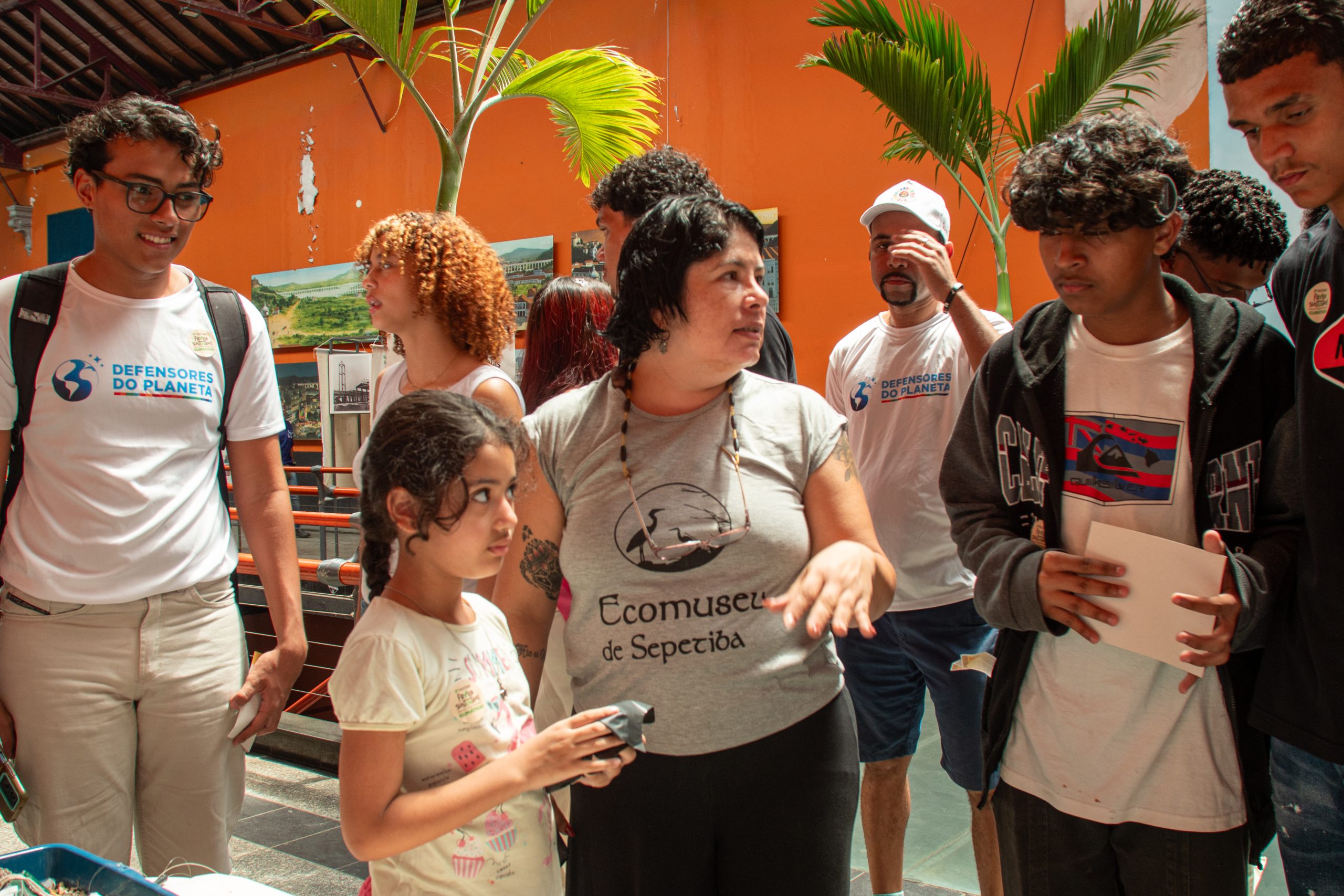
Bianca Wild, from the Sepetiba Ecomuseum, presented an educational activity developed for schools called Bay Detectives: Citizen Science in Action. The activity—which featured a sample of heavily polluted sand from Sepetiba Beach collected by COMLURB, the municipal waste collection utility—challenged students to identify which elements were natural and which were not.
“We place the material in boxes—which we call stations—and the students we work with have to investigate the residue and observe what belongs in that ecosystem and what doesn’t. What they usually find is lots of plastic waste, along with decomposing organic matter… Our goal is to show that people only preserve what they love, and people only love what they know. So we want to show these children, these students, that the place where they live is rich in biodiversity and in history—it’s the fifth-largest bay in Brazil and home to the largest population of gray dolphins in the world.” — Bianca Wild
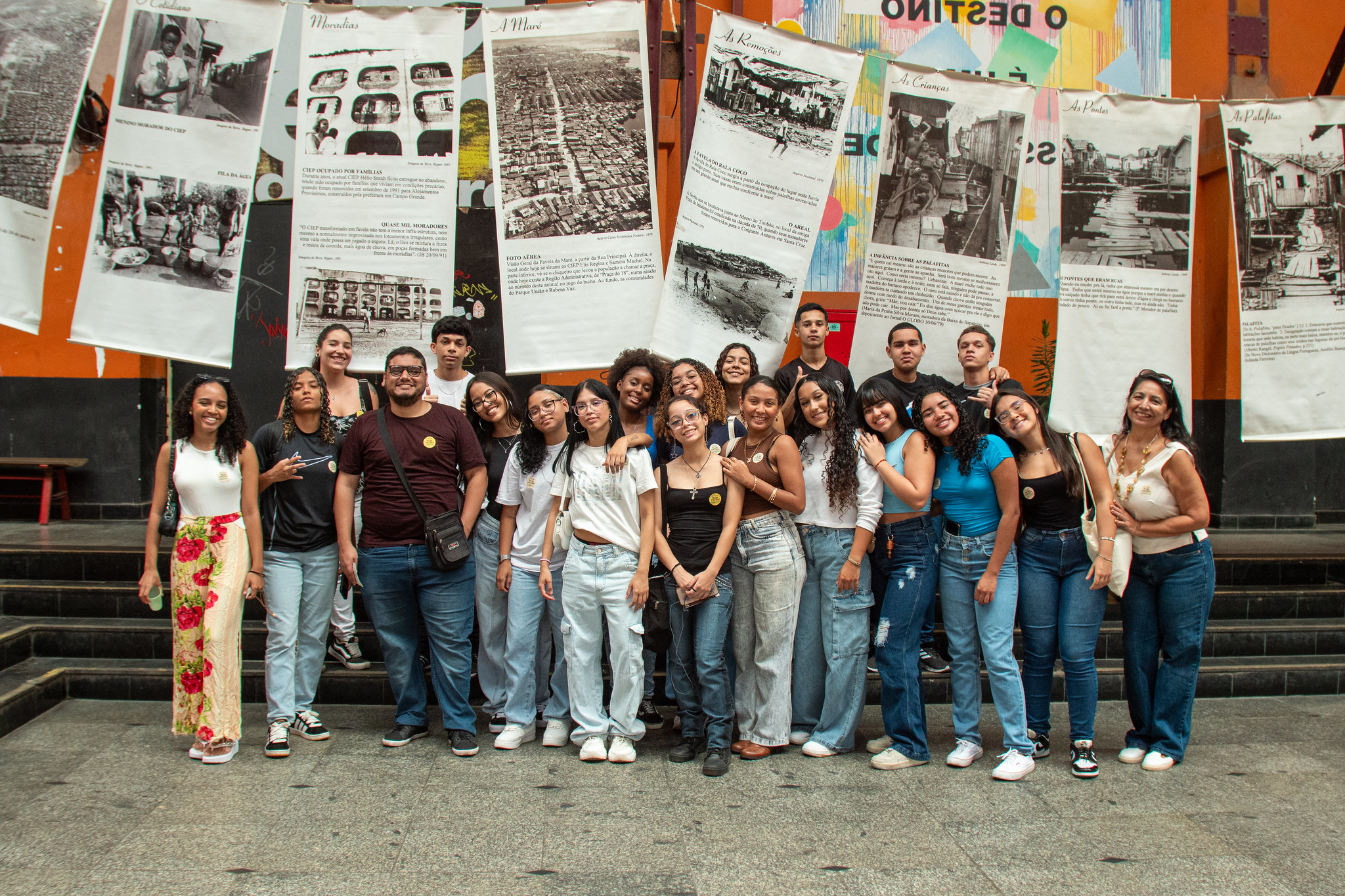
Márcia Santos, from the Seeds from the Earth Collective, visited the Favela Climate Memory exhibition and shared her experience.
“In my view, the exhibition shows what we don’t normally get to see—it shows things from inside the favela. It highlights the importance of memories, of preserving the memories of our struggles and our communities. I saw an image there, I think it was of the seamstresses from Rio das Pedras, and it really moved me—the struggle of so many women, women like me: from a peripheral area, Black, poor, you know—but who make all the difference in their communities. This needs to be shown. It’s very important, it gives visibility to these people. And I think that, beyond the fight for preservation, it’s also something that needs to be shown to the world.” — Márcia Santos
Discussion Circles
The dozens of discussion circles were moments of exchange among favela residents, organizers and collectives, along with allies—dialogues about sustainable solutions, designed by favelas and for favelas. Participants from different communities shared experiences, challenges and solutions around themes such as the environment, solidarity economy, urban gardens, waste management and the guarantee of rights. The Community Land Trust Project facilitated the circle “Right to Land and Climate Justice: Innovating with the Community Land Trust,” while RioOnWatch invited attendees to “Publish Your First Article with Us, as a ‘Cria’ or an Ally” during their talk.
Browse the Photo Album of the Exhibitions and Discussion Circles at the 2nd Sustainable Favela Festival:

Hands-on Workshops for All Ages
The space where the hands-on workshops for all ages took place saw a steady flow of visitors throughout the day, with activities such as urban art, cordel storytelling, composting, mapping emotional landscapes, reclaiming stories and promoting grassroots communication, biojewelry, seasons of the year and climate change, crafts, among others—an exchange that involved a great deal of creativity.
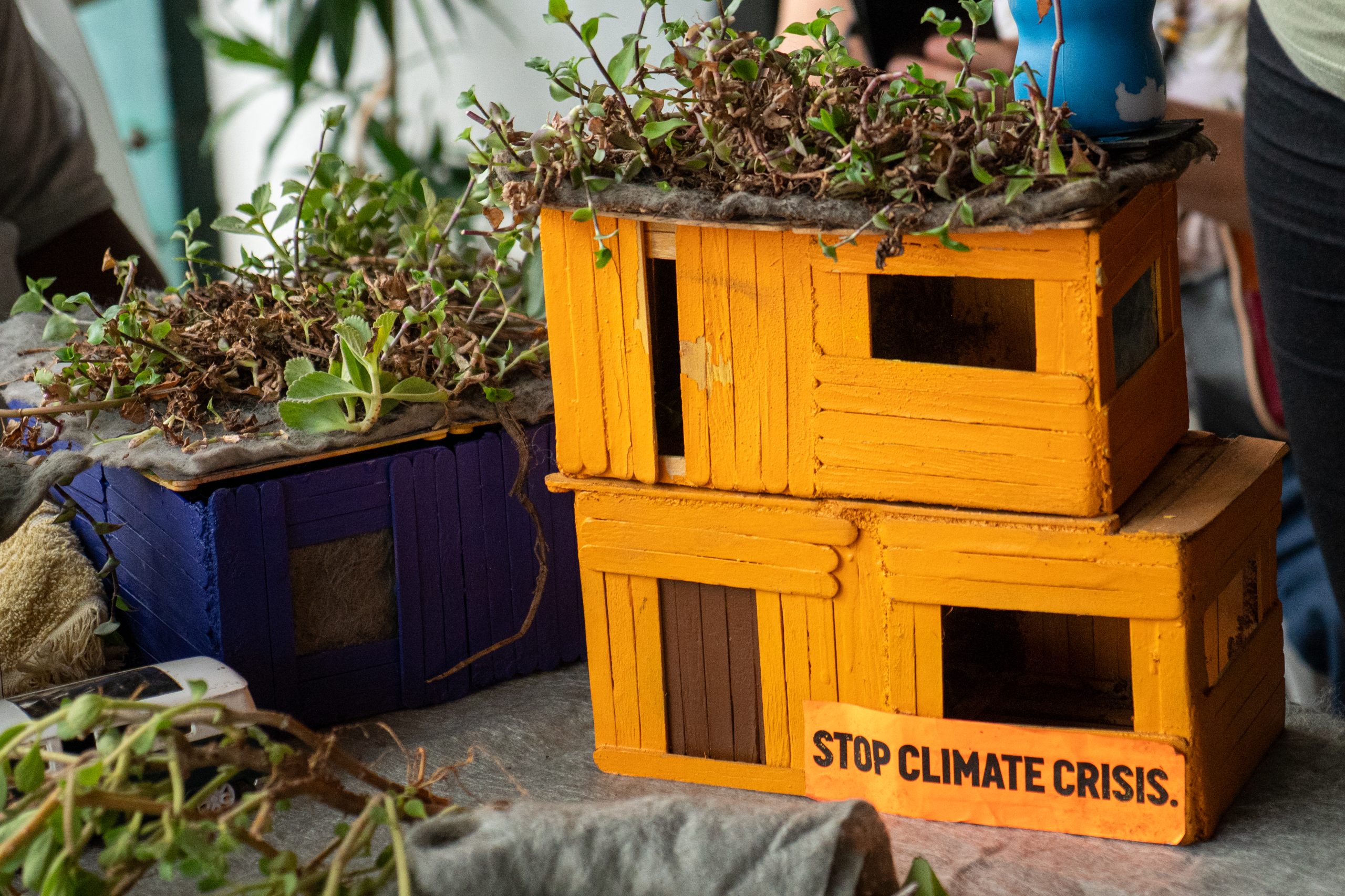
During the activity “Exchanging Ideas with Green Roof Favela,” Luiz Cassiano, from the Parque Arará favela, explained the efficiency of green roofs in reducing temperatures in favela homes and how this low-cost, nature-based solution that mitigates the effects of climate change can be expanded to other favelas. Using a model of a house with a green roof, Cassiano spoke with the audience about his experience developing this climate adaptation in the favelas.
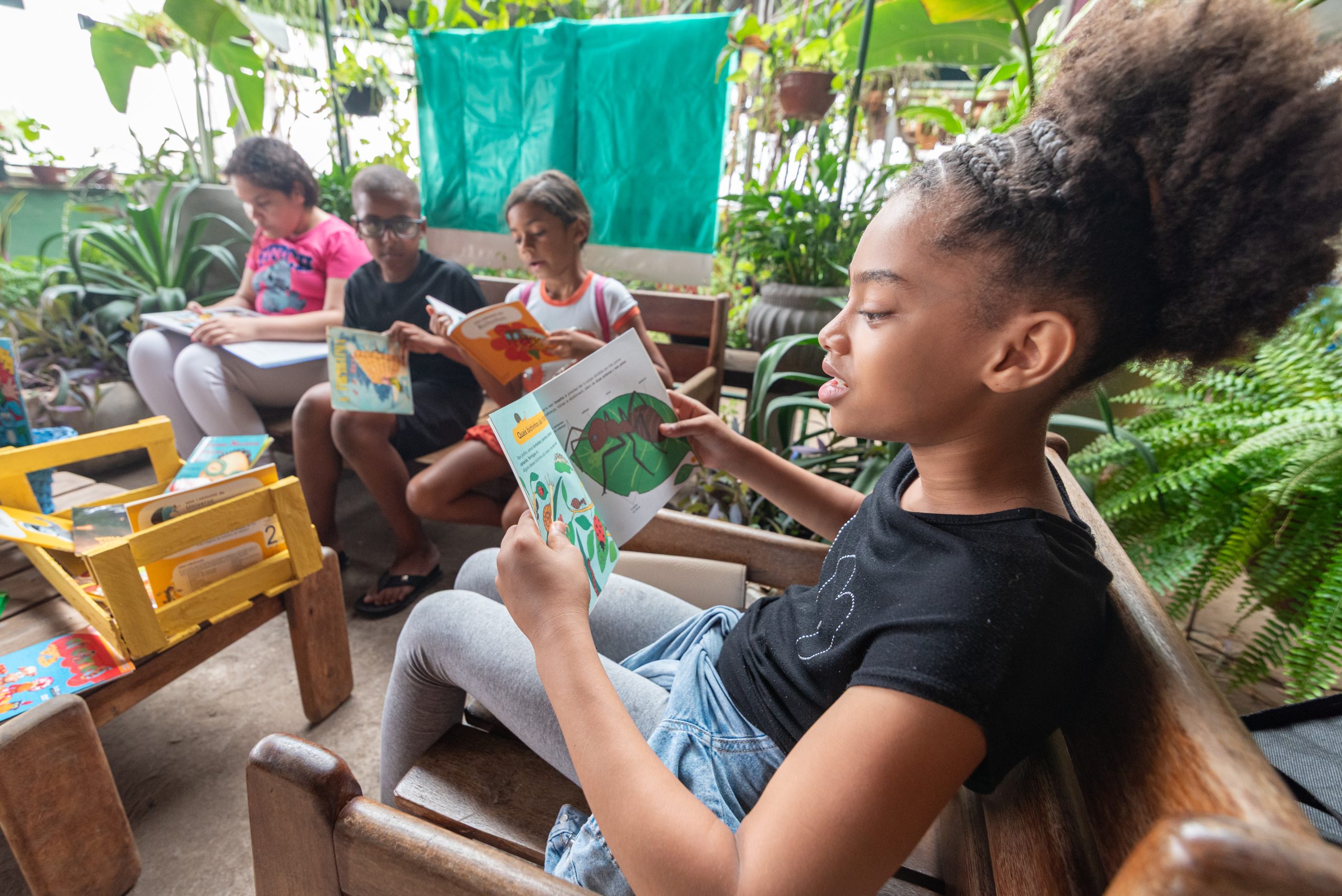
Ilaci Oliveira, from the Transvida Cooperative in Vila Cruzeiro, led a reading workshop for children.
“I’m here at this beautiful moment of the 2nd Sustainable Favela Network Festival promoting reading. What does it mean to promote reading? It’s when you awaken in children the desire to love words, to love books.” — Ilaci Oliveira
Workshops and Participating Activities: Exchanging Ideas with Green Roof Favela (Parque Arará); When the Favela Innovates: Regeneration and Social Innovation (Reference and Information Center for Brazilian Arts and Culture/Gamboa); On the Trail of Invaders: Socio-Environmental Solutions for the Control of Invasive Exotic Species (Agave Atelier); Christmas Wreath Craft Workshop (Favela Museum/PPG); Exhibition and Workshop on Soils (Embrapa Soils – Embrapa & School Program); Telling and Coloring: Cordel Stories for Children (Favela Art/Complexo do Alemão); Reclaiming Peripheral Stories (Agência Lume/Rio das Pedras); Creativity, Waste and Nature: A Space Between Knowledge, Aromas, and Flavors — Tasting and Group Activity (Green Space Vegetable Garden Project/Niterói); Interactive Exhibition “Seasons of the Year and the Impact of Climate Change” (Alfazendo/EcoRede/City of God); Creative Notebook Workshop (The Carolinas of Jacutinga/Mesquita); Sustainable Alternatives for Improving the Water Supply (Urban Waters Studies Laboratory/UFRJ); How to Build a Homemade Biodigester (Josefa Horta/Complexo do Alemão); Me and Space: Mapping the Emotional Landscape (Horizonte NGO/Vidigal); Composting Is Giving Back to Nature What Belongs to Her: Strong Soil, Fertile Future! (Girassol Agroecological Supplies and Services/Mangueira); Make Your Flag! (Arremate Lab/Duque de Caxias); Urban Art Workshop (Guararapes); Creative Territories in Motion: Innovation in Cultural Management (Reference and Information Center for Brazilian Arts and Culture/Gamboa); and Biojewelry Workshop (Seeds from the Earth/Complexo do 18, in Piedade).
Healing Spaces
One of the most popular spaces was the care and self-care area, focused on activities that promote physical, emotional, and mental health: the Healing Space. There, discussion circles took place alongside individual and group sessions offering alternative therapies to the public.
Flavio David, from the Parque da Cidade favela in Gávea and part of ColetivoFit, led a physical activity session focused on body care.
“The goal is to use the ball, not the [Pilates] equipment, alright? The idea is to train the body, strengthen the main bases—the pelvic region, the abdomen, the spine, and the chest. We always start with an abdominal exercise.” — Flavio David
Marcia Souza offered Pranic Healing (Favela Museum/PPG), an energy realignment practice that promotes physical healing.
“I brought the Pranic Healing technique, which aligns and cleanses the chakras, bringing balance to the body. We work with eleven chakras, and the idea is to give the body ways to heal itself, because [our body] has memory. When we get hurt, the body heals—but it also holds on to that memory, and sometimes it’s stagnant energy, blocked pathways. The prana works to cleanse that. I turned to Pranic Healing to take care of myself, and it worked so well that I felt the urge to learn it and share it with other women.” — Marcia Souza
Healing Activities: Exercise and Health Practices (ColetivoFit Physical Activity/Parque da Cidade); Therapy — Care and Self-Care Activity (Women Caring for and Moving Territories/Pedreira); Favela Heals — Integrative Therapy (Favela Museum/PPG); Healing and Creativity Workshop with Neurodivergent Mothers and Other Women (Women of Stone Collective/Pedra de Guaratiba); Wellness Activities and Practices in Times of Climate Crisis (Naturalize Good Living Project/Vigário Geral); “The People Caring for the People in Dialogue with the SUS” (Fiocruz and Serra da Misericórdia Integration Center/Complexo da Penha); Care and Support Circle “Development with Purpose, Sustainable Pathways” (Favela In/Rocinha); “Walking the Path of Afro-Healing: Ancestral Therapies” (Makeda Network); Nature Reconnection Circle: Forest Bathing and Other Activities (RJ Forest Bathing Collective); AcuSphera Healing Therapy (Favela Museum/PPG); Integrative Environmental Health Practices (Marias in Action/Vila Kennedy); “Instant Poetic Life Experience Writings” (In-Put Environmental Collective); and “Anti-Stress Music” Pocket Show (Lomaritaka Peripheral Music/São Gonçalo).
Browse the Photo Album of the Healing Space, Workshops and Film Club at the 2nd Sustainable Favela Festival:

Film Club and CGD Course
At the Film Club, screenings included Nature and Dreams, Horto’s Roots, Trash? Not to Us! and Baixada Never Surrenders. In addition, the Decodifica Institute facilitated the course “Climate Adaptation Indicators: Citizen-Generated Data to Connect the Global and the Local,” with Kayo Moura, the institute’s research coordinator, and Marcela Toledo, research analyst.
“We held a workshop on climate adaptation indicators and Citizen-Generated Data (CGD), connecting the local and the global. The goal was, first, to introduce the discussion about climate adaptation, recognizing favelas and peripheries as the areas most in need of it. Then, we gave an overview of what indicators are, so that community leaders and residents can have tools to formulate their own in different thematic areas. We also do an exercise, bringing people to think about the Global Goal on Adaptation (GGA), using its thematic axes as a guide for favelas to reflect on what their own adaptation targets would be and what indicators could measure these targets—connecting the global and the local.” — Kayo Moura
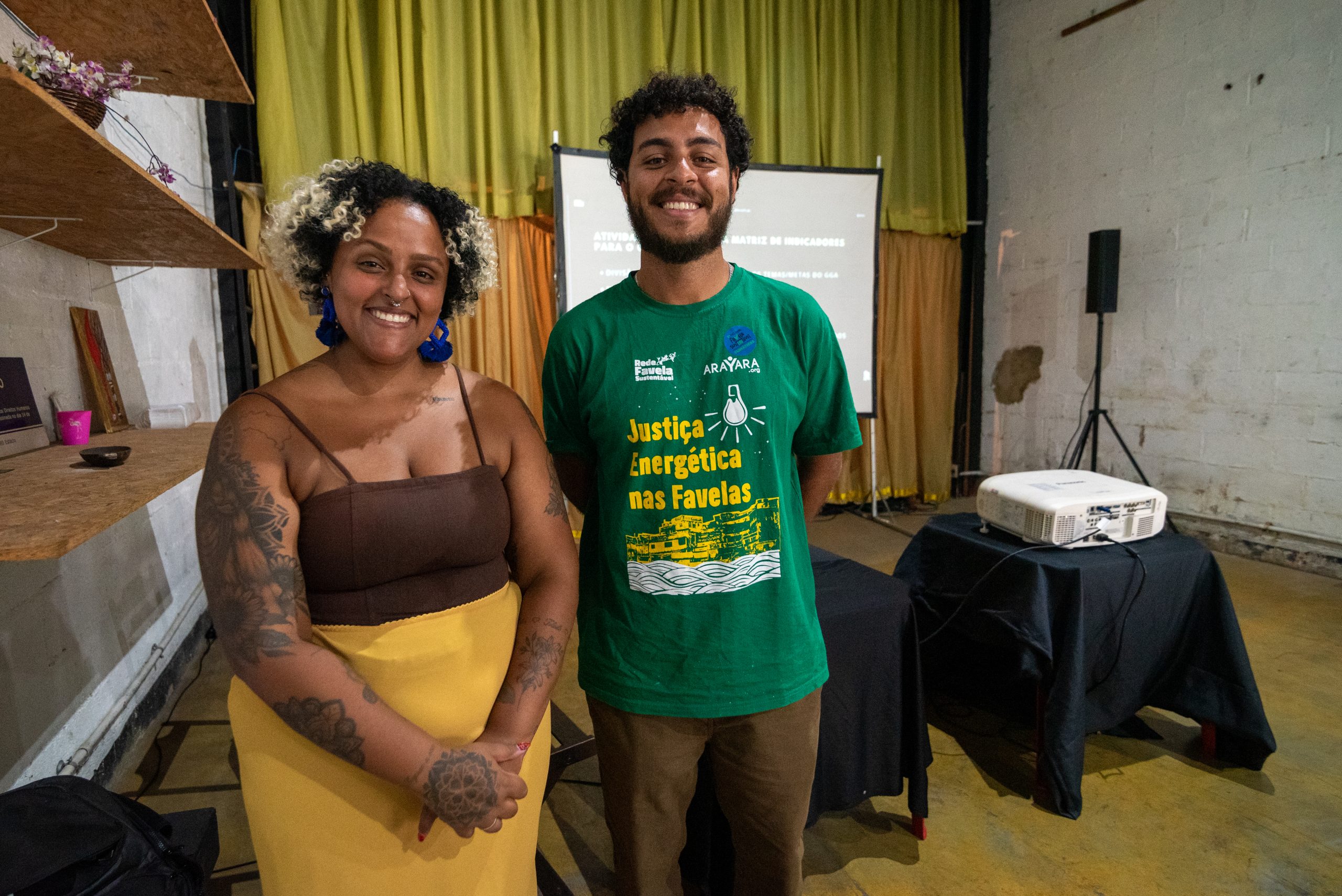
Films and Workshop: Workshops “Trash? Not to Us! In Chaos, an Opportunity for Transformation” (PSSHA Haroldo Sustentável) and “Climate Adaptation Indicators: Citizen-Generated Data to Connect the Global and the Local” (Decodifica Institute); documentary screenings Cine Atitude (Social Attitude NGO/Santa Marta), Horto’s Roots (Horto Museum and Horto Natureza/Horto), Nature and Dreams (Favela Film Club), and Baixada Never Surrenders.
Press Conference
The official launch of the COP30 Letter From the World’s Informal Settlements took place a few weeks before COP30 in Belém at a press conference during the 2nd Sustainable Favela Network Festival, attended by community leaders, representatives of socio-environmental movements, journalists and technical allies.
The launch reinforced the role of favelas, traditional and peripheral communities as leaders in shaping pathways toward climate justice.
“We are holding this press conference three weeks before COP30, where decisions will be made that could guarantee—or not—our survival on this planet and environmental and climate justice. Our festival today focuses on community-based climate solutions. It is urgent to put favelas at the center of these discussions. This will be the first COP with many people raising their voices about the impacts of climate change on favelas and other peripheral areas, marginalized and neglected by the State for various reasons.” — Theresa Williamson
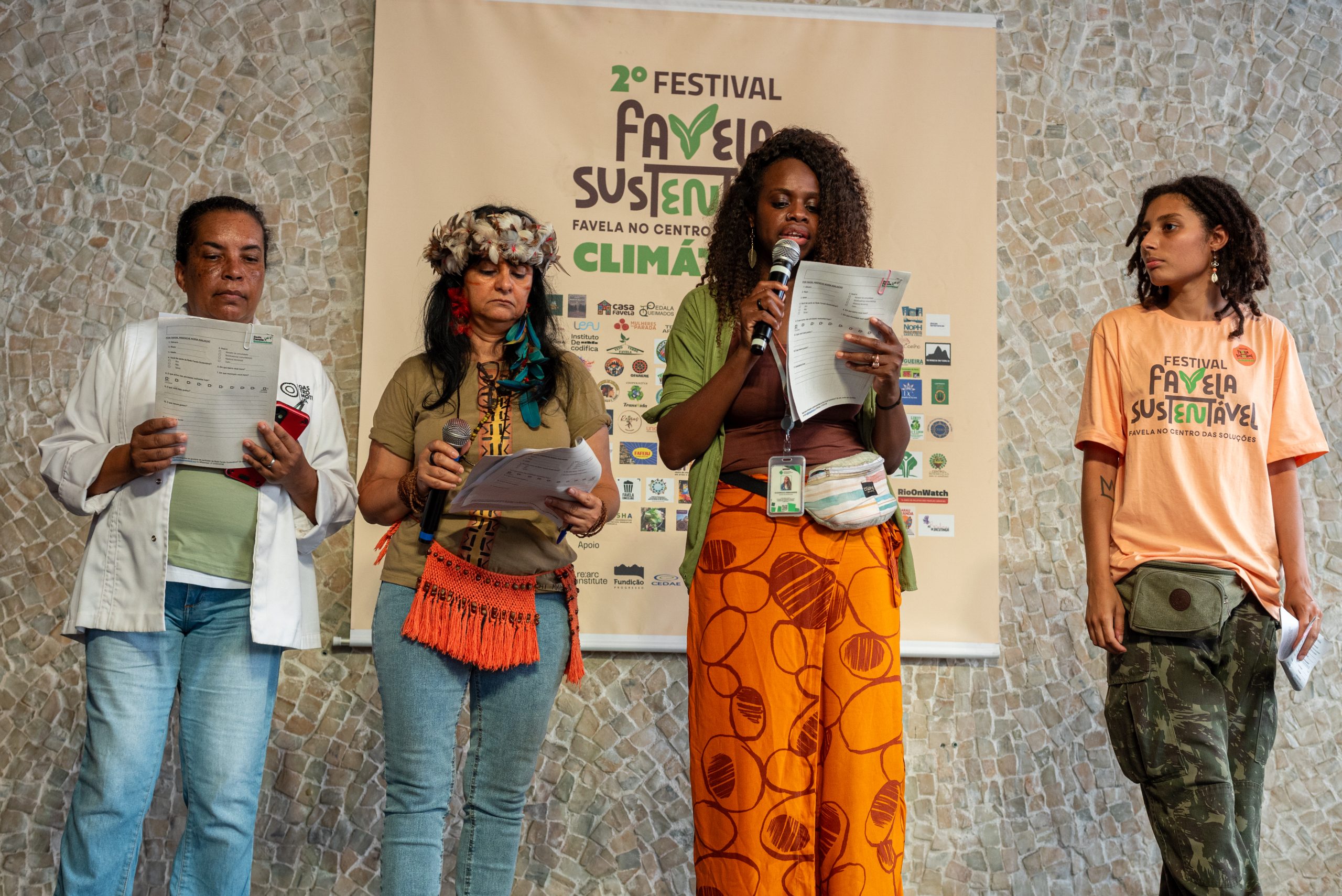
“No decision affecting the climate should be made without including those most impacted—and the solutions they bring—in the decision-making process. Our climate crisis was produced through the same dominant, centralized, hierarchical, top-down system that today governs climate decision-making. However, the solution to this crisis must engage all people. We are all part of the solution for this new moment that the world is facing. Given the real impacts of climate change on our communities, we demand climate and economic justice from decision-makers. Nothing that impacts us, without us! There is no future without favelas and disenfranchised populations at the center of global climate decisions.” — Giovane Vieira
The 2nd Sustainable Favela Network Festival reaffirmed its role in bringing together innovative socio-environmental solutions and strengthening the protagonism of favelas. In particular, this edition, with the launch of the COP30 Letter from the World’s Informal Settlements—a manifesto defending the centrality of favelas, traditional communities and marginalized groups in global climate decision-making—solidifies the Sustainable Favela Network as a space for political coordination and advocacy, highlighting that important solutions to the climate crisis are born in the favelas.
Save the date! The Sustainable Favela Network has already confirmed that the 3rd Sustainable Favela Network Festival will take place on October 17, 2026. It’s going to be even more unmissable! Mark your calendars!
In addition to this official coverage of the 2nd Sustainable Favela Festival, we are also publishing two complementary articles: one on the festival’s food sovereignty activities and another on its environmental education initiatives.
Click here to watch the moving 10-minute video of the festival with English subtitles.
Check out the Official Album of the 2nd Sustainable Favela Network Festival on Flickr:

*The 2nd Sustainable Favela Festival: Favelas at the Center of Climate Solutions is organized by the Sustainable Favela Network with the support and partnership of re:arc institute, Fundição Progresso and CEDAE. Individual donors to Catalytic Communities have provided extra support, allowing the event to scale beyond initial projections. The 2025 event is also part of three other essential pre-COP agendas taking place in the city of Rio de Janeiro: the Rio de Janeiro Sustainability Turnaround, the 15th Annual Rio Agriculture Week, and UN-Habitat’s Urban October. The Sustainable Favela Network (SFN), the Community Land Trust (CLT), and RioOnWatch are initiatives of the NGO Catalytic Communities (CatComm).
About the author: Bárbara Dias was born and raised in Bangu, in Rio’s West Zone. She has a degree in Biological Sciences, a master’s in Environmental Education, and has been a public school teacher since 2006. She is a photojournalist and also works with documentary photography. She is a popular communicator for Núcleo Piratininga de Comunicação (NPC) and co-founder of Coletivo Fotoguerrilha.